Tuesday, May 8, 2012
Introduction:
Eating healthy is easy, and with time should come naturally. However, it doesn’t involve cutting out certain things like fats or carbohydrates from your diet. It also doesn’t mean that ice cream or cake are on the no-no list either. Just limiting and maybe even cutting down a little bit should help you keep a healthy lifestyle when growing older as well. It’s really important to keep your healthy diet as a teen going on even when you grow old. If not, it raises the risk of diseases such as cancer or cholesterol issues. It also doesn’t help to over or underdose of everything. Finding out the right caloric intake for yourself is just as important as choosing the right food too eat. We hope that this blog will clear up any questions that may have been unanswered . Stay happy and healthy!
Monday, May 7, 2012
Importance of Eating Healthy as a Teen
As a teenager your body changes and develops. Your metabolism gets slower and your body doesn’t contain as much energy as it used to if you were a kid. Your body also starts to grow rapidly and to fill the gaps, you need all the healthy nutrients you can get. When you eat unhealthy foods such as sugars, oils, fats etc. your lifeline is cut because when it goes into your body the unneeded things go to into your bloodstream and into your heart. When you consume too much fat you can develop Atherosclerosis. This is when plaque builds up in your blood vessels causing a restricted blood flow which can lead to heart attack or stroke. To prevent things like Atherosclerosis from happening you could eat healthy things such as carrots, lettuce or fruits like apples. An average person should eat 5 to 7 servings of fruits and vegetables a day.
Eating healthier can also help you live a better and happier life. I know most of us have a hard time climbing up three flights of stairs. Or getting through a seven minute mile. Eating healthy can prevent things like that because it gives you more energy that can help your muscles maintain at a more consistent rate.
Sources/ Links
http://www.eatinghealthyfoods.org/benefits-of-eating-healthy.html
http://www.helpguide.org/life/healthy_eating_diet.htm
Eating healthier can also help you live a better and happier life. I know most of us have a hard time climbing up three flights of stairs. Or getting through a seven minute mile. Eating healthy can prevent things like that because it gives you more energy that can help your muscles maintain at a more consistent rate.
Sources/ Links
http://www.eatinghealthyfoods.org/benefits-of-eating-healthy.html
http://www.helpguide.org/life/healthy_eating_diet.htm
How to: Determined Daily Caloric Intake
“How many calories is this?” is the main question most Americans ask when trying something new. Maybe it’s because all the extra calories your body intakes turns into fat, but calories also have some of the good stuff. With the right amount you can get anything and everything that you want done...DONE! You see calories are used as a type of energy source called energy currency. Things that could affect your caloric intake are the amount of energy you partake in a day and how old you are. The recommended caloric intake for teen girls are 1,800-2,400 and for teen boys it is 1,800-3,200.
Sources/ Links
http://weightloss.about.com/od/eatsmart/a/blcalintake.htm
livestrong.com
Everybody has a different caloric intake in order for it to stay energy and not for it to turn into fat. You can calculate that by using the a simple formula called the Harris-Benedict Principle. You can use this to calculate your BMR. Your BMR is the amount of energy your body needs to function.
Women- 655 + (4.3 x weight in pounds) + (4.7 x height in inches) - (4.7 x age in years)
Men- 66 + (6.3 x weight in pounds) + (12.9 x height in inches) - (6.8 x age in years)
After that you have to incorporate your daily activity into your caloric needs. If you have no activity or you are sedentary you have to multiply your BMR by 20 percent. If you are lightly active then you multiply your BMR by 30 percent. If you exercise most times a week than you take your BMR and multiply it by 40 percent. If you are extremely active you multiply your BMR by 60 percent.
EX: Sedentary: BMR x 20 percent
Lightly Active: BMR x 30 percent
Mostly Active: BMR x 40 percent
Extremely Active: BMR x 60 percent
After you have done this you add the first number you got by the second number you got and that should be the amount of caloric intake you should have a day. If you have more then this number it is going to turn into fat and you’re going to have to burn it off. If you have a lot less than that number then you might get light headed during the day and possibly faint. As you lose weight you can recalculate your caloric intake.
Sources/ Links
http://weightloss.about.com/od/eatsmart/a/blcalintake.htm
livestrong.com
Carbs, Proteins, and Fats (Macronutrients)
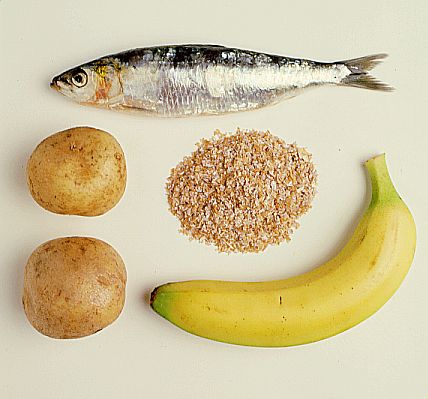
Carbohydrates are composed of CO2 and H2O. Their role aids good digestion, gives you energy, fuels metabolism and gives energy to your cells. The recommended intake for teens are 45%-65% of daily caloric intake. Healthy food sources of carbs are easy to find in potassium enriched foods. Some healthy examples are bananas and whole wheat bread in the morning or brown rice and even pea soup in the afternoon. From first hand experience, bananas with peanut butter on whole wheat bread sprinkled with honey is a great morning breakfast. For on the go, fruits like apples or oranges would complement cottage cheese with honey.
Proteins are composed of amino acids, CO2, nitrogen, hydrogen and oxygen. They repair body tissue, regulate body temperature and keep the body healthy. The recommended intake is 53 grams for teenage boys and 46 grams for girls. It should make up around 10%-35% of daily caloric intake. Some healthy foods for protein are meats such as fish, lean flank beef for dinner or eggs and nuts with brie.
Fats are made of glycerol, fatty acids, and triglycerides. They mainly store energy and protect vital organs. The recommended intake ranges between 1,800-2,400 calories for girls, 1,800-3,200 calories for boys and should make up 20-35% of daily calories. Some healthy food sources are walnuts, oils such as olive oil or canola oil and fatty fish like salmon or herring. These fats are called monounsaturated and polyunsaturated fats and are considered “healthy” because of their aid in keeping you healthy and keeping your cholesterol down.
Sources/ Links
livestrong.com
webmd.com
Helpguide.org
ods.od.nif.gov
Micronutrients
Vitamin A is composed of potassium, magnesium, sodium and iron. It helps your vision improve, which might not seem so important now but helps in age. The recommended intake is 900 grams for boys and 700 for girls. Some healthy food sources are carrot juice, sweet potatoes or spinach.
Vitamin B or Vitamin B12 as commonly referred to, is composed of potassium, magnesium, sodium and iron and cobalamin. If not taken it can cause fatigue, but if taken helps the nervous system and brain. The recommended intake is 2.4 micrograms for all teenagers. This vitamin can be found in clams, liver or tuna fish.
Vitamin C is probably one of the most recommended vitamins to take and is composed of the same potassium, magnesium, sodium and iron. It can cause scurvy if not taken. Some sources for this vitamin are fruits (oranges are
high in vitamin C) or leafy vegetables. Some examples are bean sprouts, green peppers and basically many major plant sources.
Sources/ Links-
http://www.whatdoesvitamincdo.org/
http://thevitaminsource.net/what-does-vitamin-b12-do-for-the-body/
http://ods.od.nih.gov/factsheets/VitaminA-HealthProfessional/#h3
http://michaelmorales.info/tag/examples-of-micronutrients
Vitamin B or Vitamin B12 as commonly referred to, is composed of potassium, magnesium, sodium and iron and cobalamin. If not taken it can cause fatigue, but if taken helps the nervous system and brain. The recommended intake is 2.4 micrograms for all teenagers. This vitamin can be found in clams, liver or tuna fish.
Vitamin C is probably one of the most recommended vitamins to take and is composed of the same potassium, magnesium, sodium and iron. It can cause scurvy if not taken. Some sources for this vitamin are fruits (oranges are
high in vitamin C) or leafy vegetables. Some examples are bean sprouts, green peppers and basically many major plant sources.
Sources/ Links-
http://www.whatdoesvitamincdo.org/
http://thevitaminsource.net/what-does-vitamin-b12-do-for-the-body/
http://ods.od.nih.gov/factsheets/VitaminA-HealthProfessional/#h3
http://michaelmorales.info/tag/examples-of-micronutrients
Sunday, April 29, 2012
What Foods You Should Limit and Avoid
As an average teen, in your diet you should limit your intake of sweets, packaged/processed food (also known as "junk food"), and fatty foods (such as cheeseburgers, pizza, french fries, etc). Even though you may think some of these foods are very delicious, if you want to have a healthy life you should limit and avoid them by turning to a more "healthier" source of nutrition. You should limit and avoid these foods, because they have lots of saturated fats in them, most of the foods do not have many nutrients, the foods are harder for your body to digest so it causes stress on your body, and if you continuously eat these foods then they can cause cancer.
Sources/ Links
http://www.healthy.net/scr/article.aspx?id=1378
http://www.healthassist.net/conditions/food-avoid.shtml
Three Day Meal Plan
Three Day Meal Plan
Sources/ Links
http://www.nhlbi.nih.gov/health/public/heart/obesity/lose_wt/calories.htm
http://www.webmd.com/food-recipes/features/the-best-healthy-snacks-in-your-supermarket?page=2
Subscribe to:
Posts (Atom)